Bondings
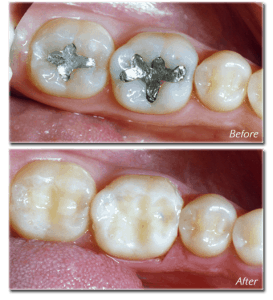
Dental bonding involves the use of a tooth-colored resin to enhance the shape or appearance of a tooth. A special light is used to harden the material to the tooth. The tooth is prepared by drilling and roughening the treatment surfaces before the bonding materials are applied to the tooth. This treatment is an effective solution for tooth restoration, and offers cosmetic benefits to improve the appearance of the tooth.
Bonding is most common when a cavity is treated where the resin is used to repair the empty space after the decay is removed. The bonding material helps repair teeth that are chipped or cracked. When bonding is used for cosmetic or aesthetic purposes, it helps to improve the appearance of tooth discoloration, fills in the spaces between the teeth, improves the shape of the teeth,and results in an aesthetic pleasing appearance.
Inlays and Onlays
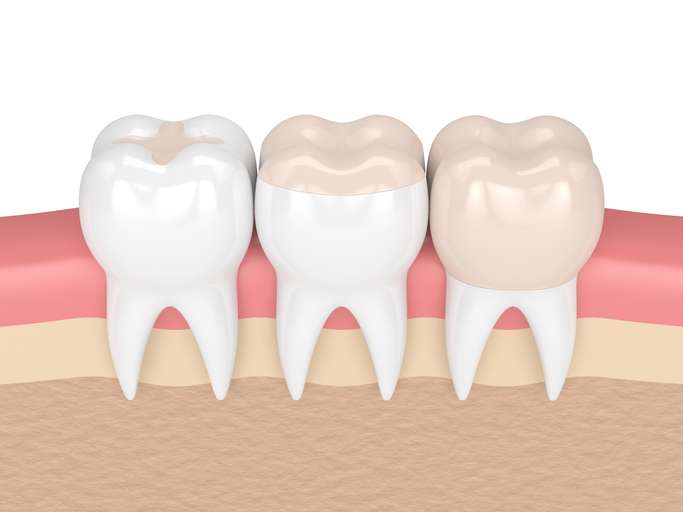
When a full crown to cover the entire tooth is not necessary, an inlay may be used instead. A Dental Inlay is commonly used when large cavities need to be removed. The placement of an Inlay is centered on the tooth instead of over the cusps or outer edges.This custom-made dental restoration not only replaces the lost surface of the tooth but also restores the function of the tooth. The materials are bonded to the tooth to preserve the overall structure. Dental inlays are beneficial for strengthening the remaining structure of the tooth, offering a long-term effect that protects and improves your smile.
Dental Onlays are similar to Inlays, but the custom-fit materials extend to replace one or more surfaces of the tooth. These tooth-colored restorations are bonded to the teeth, creating a long-lasting solution that preserves and protects the remaining surfaces of each tooth after damage, trauma, or severe tooth decay. An Onlay helps to minimize the need for more invasive dental services in the future, such as tooth extraction, implants, and other restorations.
Both Inlays and Onlays are considered when the tooth decay on a tooth is too severe to treat with a basic bonding procedure. Inlays and Onlays can be considered as a partial crown to restore and protect the natural tooth structure.
Crowns
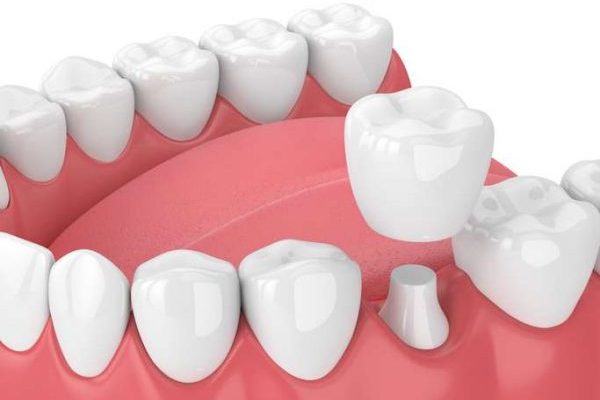
When a tooth is severely damaged, placing a crown over the remaining portion of the tooth is often an effective solution to save the tooth from extraction. Dental crowns are full coverages that help to restore the integrity of a tooth. Crowns are often used after root canals to strengthen the tooth or with dental implants when full tooth restoration is needed.
There are various reasons why an individual would need a crown:
- To protect a tooth that is weakened by decay, severely worn down, or fractured
- To protect a tooth after a Root Canal Therapy treatment has been rendered
- To restore a tooth to function after an implant has been surgically placed
- To aesthetically restore a tooth that has been stained, chipped, or fractured
A crown will not only look aesthetically pleasing, but it will also protect the integrity of your tooth and restore you back to normal function.
Bridges
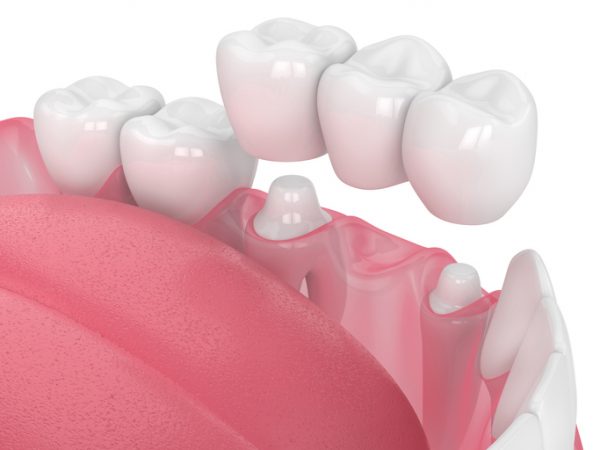
When you are missing one or more teeth, bridges can be an effective way to fill in the gaps with a false tooth. Not only does this treatment restore the appearance of your teeth, but it also helps to improve your bite and protect the positioning of the surrounding teeth. Filling in the empty space after a tooth extraction is important to preserve your oral health and improve your smile at the same time.
Several methods can be used to secure dental bridges. For example, if there are healthy teeth on either side of the gap, then a bridge can be placed using a crown over one or two healthy teeth nearby. Another option is to secure a dental bridge with one or more dental implants, using posts that are secured into the jawbone with an abutment on top to hold the bridge in the desired position.
Partials
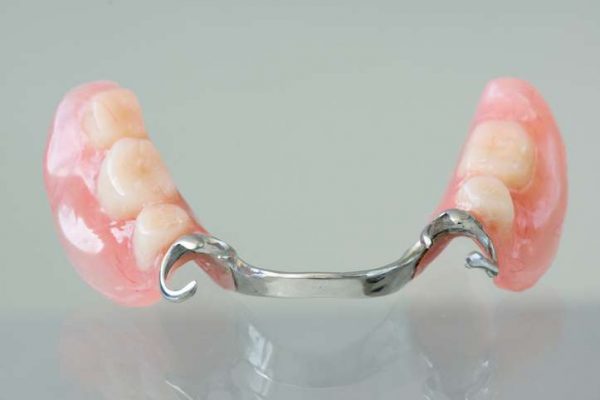
When you need dental restoration for missing teeth, and there are multiple natural teeth remaining, partial dentures can be an effective way to restore the smile.
A Partial is designed to be custom-fit for the specific part of your mouth that needs to be restored. One benefit of partials is that they are not usually permanently attached to the jawbone or teeth – making it a removable restoration.
Partials are designed with an acrylic or metal base that matches the natural color of your gums.The replacement teeth are secured to the base of the partial. Partial dentures typically have a clasp that attaches to the natural teeth, allowing you to remove the prosthetic for sleeping and cleaning as needed.
Dentures
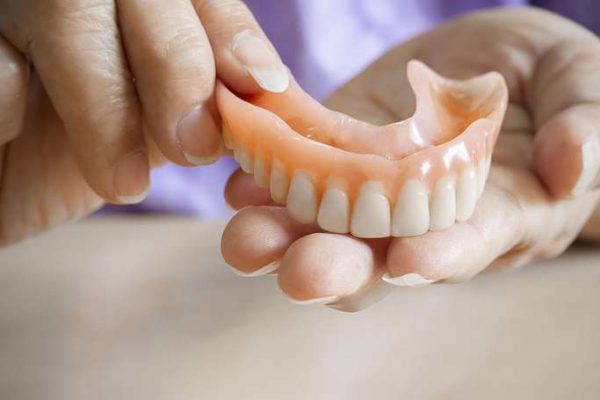
Dentures offer a customized solution when you need to replace missing teeth and restore the entire smile. These dental prosthetics are designed using artificial teeth and gums that are formed in your mouth, with the goal of replacing extracted teeth.
Full dentures replace all the teeth on either the upper or lower jaw (or both). When you start using dentures, there is a small adjustment period, but most patients quickly adapt to this dental restoration. Traditional dentures are removable appliances that hold the dentures on your gum line.
Another option is to use implant-supported dentures that are held in place with titanium posts secured in the jawbone. Many patients prefer implant-supported dentures because they are stronger and more secure, allowing natural function for eating and talking.